This is the 3rd part of a series on fearful dogs, which I started after seeing a bunch of different fearful dogs with clueless humans. These are real-life examples with detailed suggestions on better ways to handle the anxious dog involved. Don’t miss Part I & Part II. (Note: These are fearful with a strong flight instinct rather than a fight instinct. I don’t feel qualified to write about such a complex issue as severely reactive dogs, but I recommend:
- Feisty Fido: Help For the Leash Reactive Dog, 2nd Edition by Patricia McConnell & Karen London
- Scaredy Dog!: Understanding and Rehabilitating Your Reactive Dog, Revised Edition by Ali Brown
- Behavior Adjustment Training: BAT For Fear, Frustration, and Aggression In Dogs by Grisha Stewart
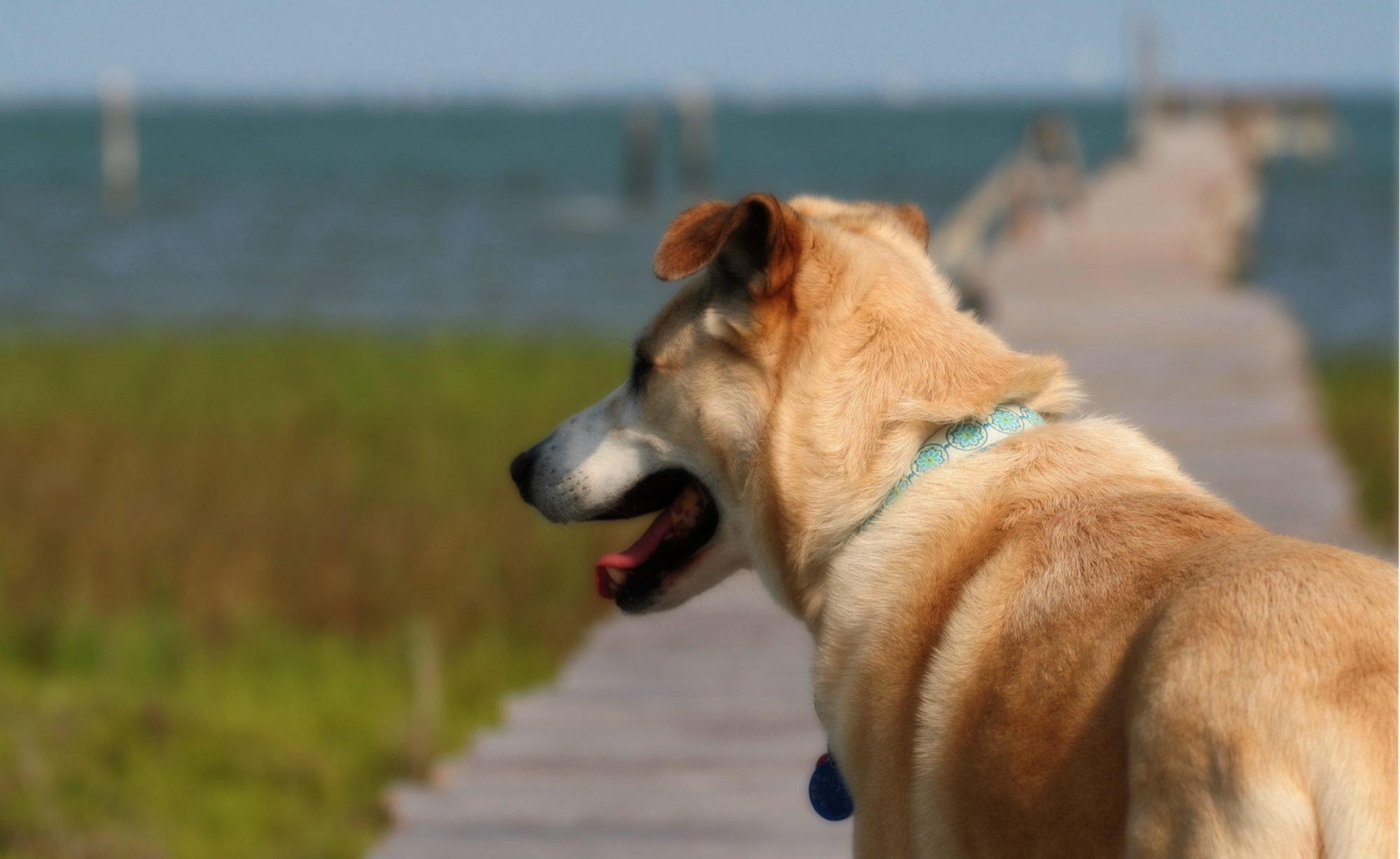
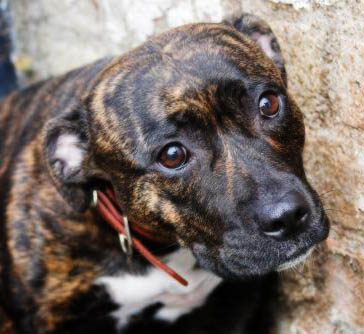
As many of you know, our dog Saffron is a fearful dog. I had to learn a lot about fearful dogs so I could help her become a well-adjusted, happy dog. I have a particular soft spot for anxious dogs. Sometimes their people know how to help them. Lots of times they don’t. Sometimes they don’t even know their dog is afraid.
In this 3rd case, the fearful dog I encountered was a physically mature, but young, Golden Retriever being walked by a man and a woman. Our timing was such that we both approached a residential intersection at the same time, with them at one corner and me & Saffron at the other corner facing them.
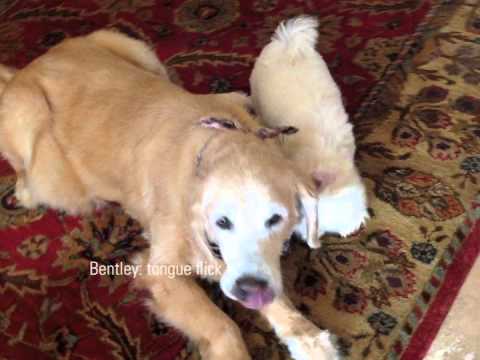
Right away I saw the dog was anxious and submissive. Why did I think that? Because she balked at stepping off the curb, turned her head to the side facing away from her person so she wasn’t facing them, the street, or us across the street. She also crouched some and licked her lips. She did not want to cross the street and I wasn’t sure if it was the street or if it was me & Saffron.
While I was judging if it was a good idea to cross towards this fearful dog, her person was trying to pull her into the street saying “Come on.” She wouldn’t budge and continued giving stressed & submissive signals. I decided it might help the other dog if Saffron & I crossed and she got to meet Saffron on their corner instead of in the street. I knew Saffron was very gentle and friendly with fearful, submissive dogs. But, before we could get to the other side, her person had hauled her into the street. As she cautiously, but bravely walked past us, I automatically gave her a heartfelt “Good girl!” even though she wasn’t my dog. Her people probably though I was a loon. Too bad!
This case wasn’t as serious as the two previous posts’ examples, but it could have been handled better. So what went wrong?
- I’m pretty sure this dog was afraid of both the street and by Saffron, so she was being asked to do too much by having to deal with both at the same time.
- Her people shouldn’t have pulled her into the street by her collar.
- And, finally, when she did what they wanted her to do, they failed to praise her. Poop!
What would I recommend instead that would have been better for their dog and ultimately for them too?
1. Get her a tight t-shirt or a Thundershirt to help calm her.
2. Use a no-pull harness like the Halti Dog Harness, Freedom Harness, Easy Walk Harness, or Walk Your Dog With Love Harness. Your dog will never be pulled by her neck and she won’t slip loose if she panics.
3. Avoid asking her to do something that is so stressful she balks. Instead, continue around the block or cross to a different corner. Or ask me to cross first and let their dog meet mine. When you have a fearful dog, it’s up to you to be their advocate. Ask if other dogs are friendly before you let them meet your fearful dog.
4. Work on her fear of crossing streets.
- Start small on a quiet street with no traffic.
- Use what you need to to get her to cross the street. Lure her with treats. If she likes playfulness, put on your imaginary clown shoes. As you approach the corner, start happy talking & being silly and continue it as you get her to cross the street. Have one of her people stand on the opposite corner so the dog (& her other person) can cross over towards someone the dog loves.
- Repeat this in short training sessions over several days and gradually remove the lures of food, play, or the other familiar person.
- Then try a more challenging street—wider, busier, or maybe just unfamiliar. You may need to reintroduce the lures. Continue until she can cross any street.
5. Work on her fear of meeting other dogs.
- Find a laid back dog who likes other dogs and has good manners for your dog to meet.
- Try to have them meet on neutral territory—not your house. Pick a place where your dog will feel the least stress. Some dogs prefer meeting outside where they don’t feel trapped. Another dog might feel too exposed outside and would do better inside.
- Go slowly.
- Monitor the introduction. If your dog starts getting overwhelmed, give her some space by leading (or calling, if off-leash) the other dog away.
- Stop the introduction before your dog gets too stressed.
- Continue by having them meet every few days. If you know another good dog for your fearful dog to meet, repeat the process with that dog.
- Check out this excellent video on introducing an anxious dog to another dog.
In the meantime, you’ll undoubtedly be encountering dogs on your walks. Before your dogs get close enough to meet, ask the other person if their dog is friendly and if it’s okay for them to meet. If it’s okay, let them meet briefly and then walk on. If they hit it off, you can let them linger, but you want to move on before your dog gets stressed.
6. PRAISE HER!! (See my post on Praising the Good for more information.) As she starts crossing the street, praise her. When she gets to the other side have a praise party—“Woohoo! Good girl! You’re so brave!” Anytime your dog interacts with another dog, praise her.
7. Stay calm and don’t broadcast your own anxiety to your dog. Don’t pull her away from what scares her, such as another dog. Don’t hold your breath or stiffen up. Try to relax. This was hard when I was with Saffron. I so wanted her interactions with dogs and people to go well, I had to work at not broadcasting my concern.
7. Know that it’s okay to calmly reassure your dog. It won’t reinforce her fears.